← Weekly Insights · July 26, 2026
When Noise Feels Too Much
A loud classroom can overwhelm some children, leading to misunderstood behaviors.
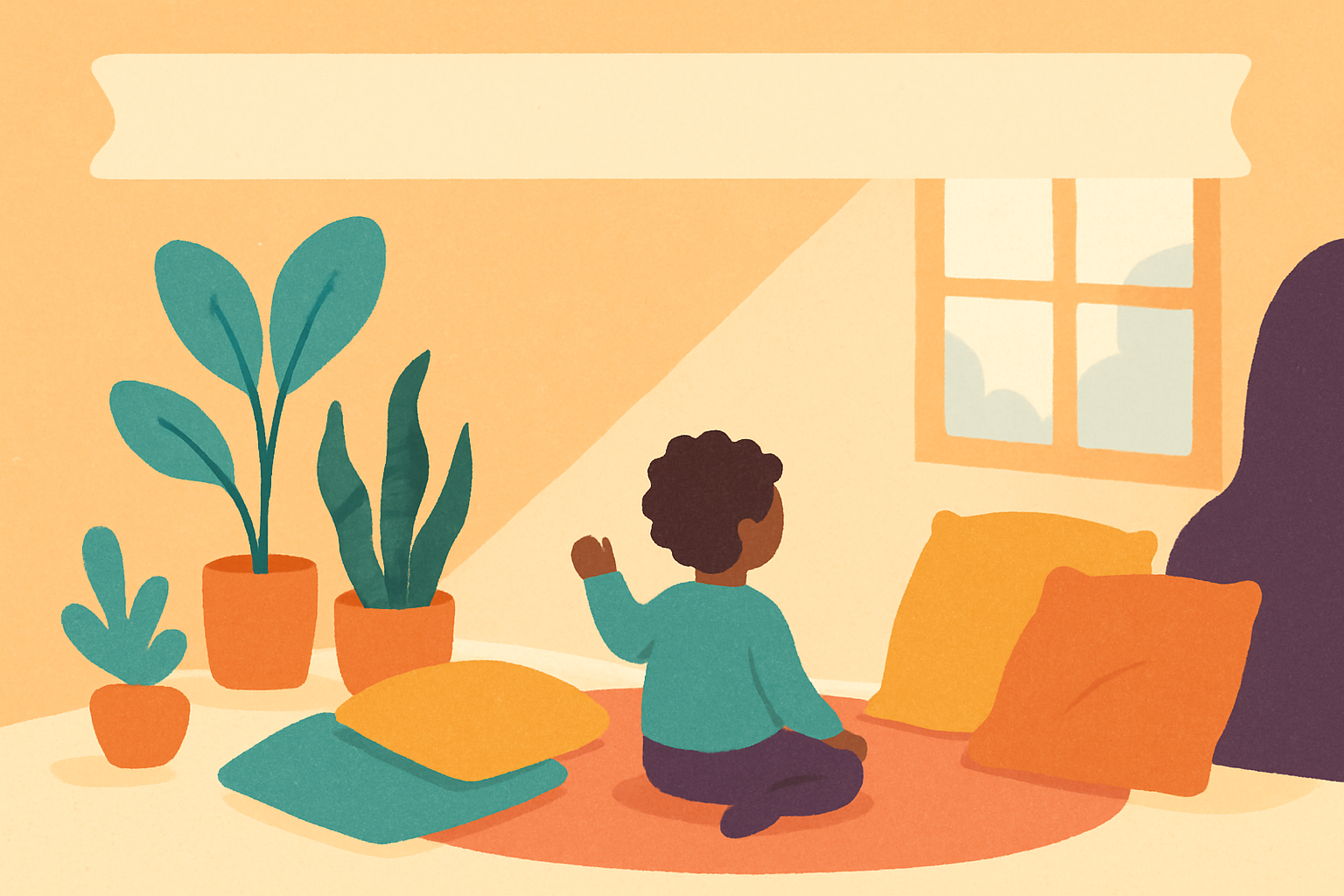
An illustrative, composite scenario — not a real named incident. Educational content only; not medical or legal advice. For diagnosis or support, consult qualified professionals.
In a busy classroom, ‘Lila’ covers her ears and withdraws during a loud group activity. Her teacher thinks she’s ignoring instructions or being defiant.
‘Lila’ feels upset and unsure how to explain she just needs quiet. Instead of help, she gets sent to sit alone, making her feel isolated and misunderstood.
Behaviour is communication
What if the classroom was designed to acknowledge children like ‘Lila’ as capable and sensitive?
What if freedom to choose quieter spaces was normal, not a punishment?
What if adults first helped children calm before expecting participation?
What was likely really going on
The Environment Feels Too Stimulating
Bright colors, loud noises, and many people can overload a child's senses, especially those sensitive to sound or touch.
Misreading Calming Behaviors as Defiance
Covering ears or withdrawing may be seen as ignoring or refusing, but often it’s a child’s way to cope with overwhelm.
Lack of Support for Self-Regulation
Children need adults to help them manage strong feelings before learning new skills or following instructions.
What could have helped
Reggio Emilia: Seeing the Child as Capable in Their Environment
Create quiet, cozy corners filled with familiar objects where children can choose to self-soothe without feeling singled out.
Montessori: Prepared Environment and Freedom Within Limits
Arrange the classroom with clear areas for active and quiet play allowing children to move freely to spaces that suit their needs.
Early-childhood practice: Regulate First, Teach Second
Recognize signs of overwhelm and offer calm reassurance or sensory breaks before expecting participation or behavior compliance.
Try this at home & school
- Add a low-noise zone with soft cushions and dim lighting.
- Introduce a visual schedule so children know when noisy or quiet times happen.
- Use headphones or ear defenders as a respected option during loud activities.
- Teach all children about sensory differences to build understanding and kindness.
- Check in with children gently rather than immediately correcting behaviors.
Create Calm Spaces for All Children
If you're supporting a child like this, our neurodiversity strategies and free guides are a good next step — or send us your situation.